
Author: J.K. Ullrich
Love at first sight might seem like a stale romance trope, but it can determine life or death for baby birds. Chicks quickly learn to recognize the first moving object they see after they hatch, usually a parent. This psychological phenomenon is called imprinting. Unlike behavior learned through experience, imprinting is a genetically programmed response that helps birds survive.
Precocial birds such as waterfowl imprint within hours of hatching so they can follow their parents to food and safety.
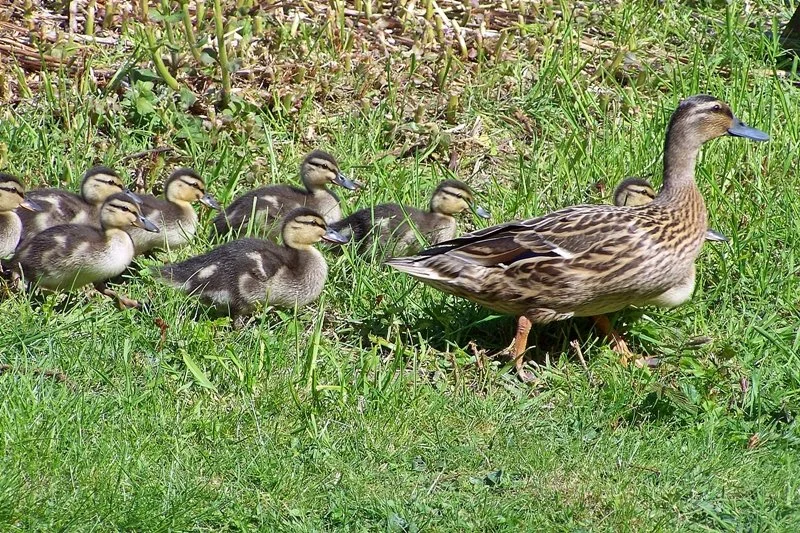
Mallard ducklings following their mother. Photo credit: T.Voekler, CC BY-SA 3.0 <https://creativecommons.org/licenses/by-sa/3.0>, via Wikimedia Commons
Altricial birds, which are born blind and require more intensive parental care, take longer to develop these associations. A study of doves found that chicks entered their optimal imprinting window about a week after hatching. However, the complex social lives of altricial species still demand strong bonds: think of juvenile magpies calling for food delivery from Mom and Dad!
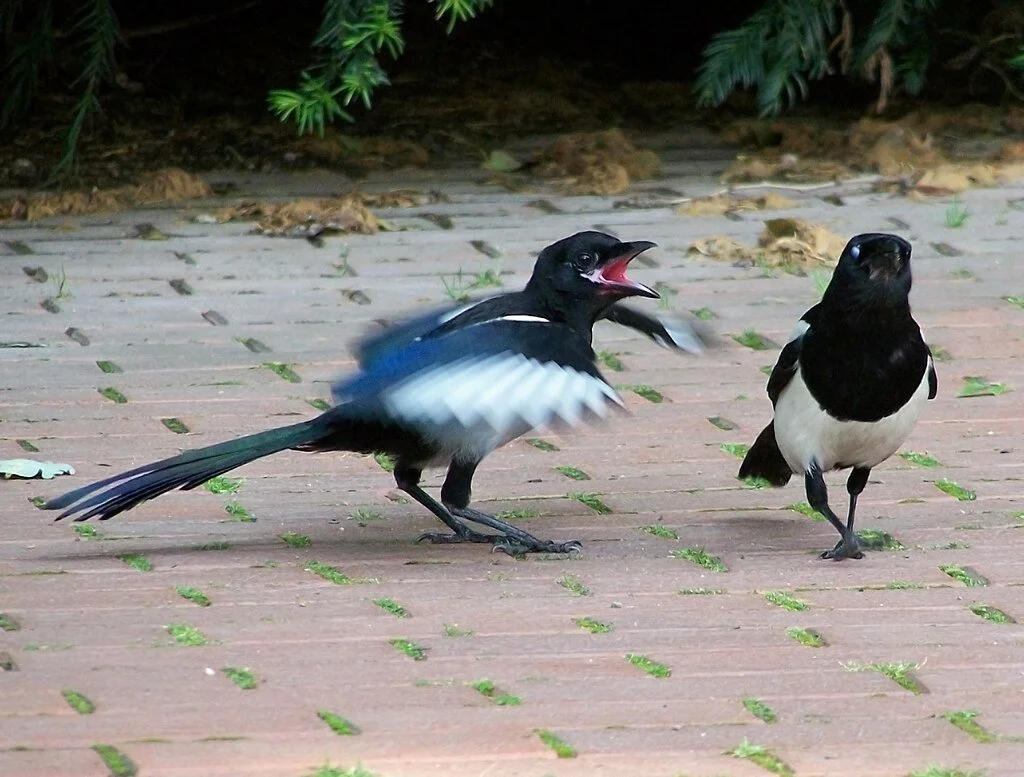
A young magpie begs for food. Photo credit: T.Voekler, CC BY-SA 3.0 <https://creativecommons.org/licenses/by-sa/3.0>, via Wikimedia Commons
German zoologist Konrad Lorenz conducted some of the first studies on imprinting in the 1930s and gave the concept its name. He used the German word prägung, which means to stamp or emboss. In one experiment, Lorenz separated a clutch of goose eggs and allowed a female goose to brood half in the normal fashion while he artificially incubated the rest. The latter goslings saw Lorenz as the first moving object in their world and began to follow him around. When they matured, they even courted him instead of other geese.
Lorenz’s flirtatious flock illustrates why imprinting on humans can be harmful to birds. Not only does this mechanism identify a parent, it is how chicks identify themselves as birds. Wild animals that imprint on people will identify as humans rather than their own species. This does not mean they necessarily enjoy human company. Instead, it inhibits their ability to learn the appropriate behaviors and vocalizations for their species.
Birds that imprint on humans may struggle to communicate with other birds, find a mate, or acquire key skills like finding food and avoiding predators. For example, BirdTLC's Ambassador Shavila could not be released because he had imprinted on humans. His lack of inhibition around people could prove dangerous in the wild.
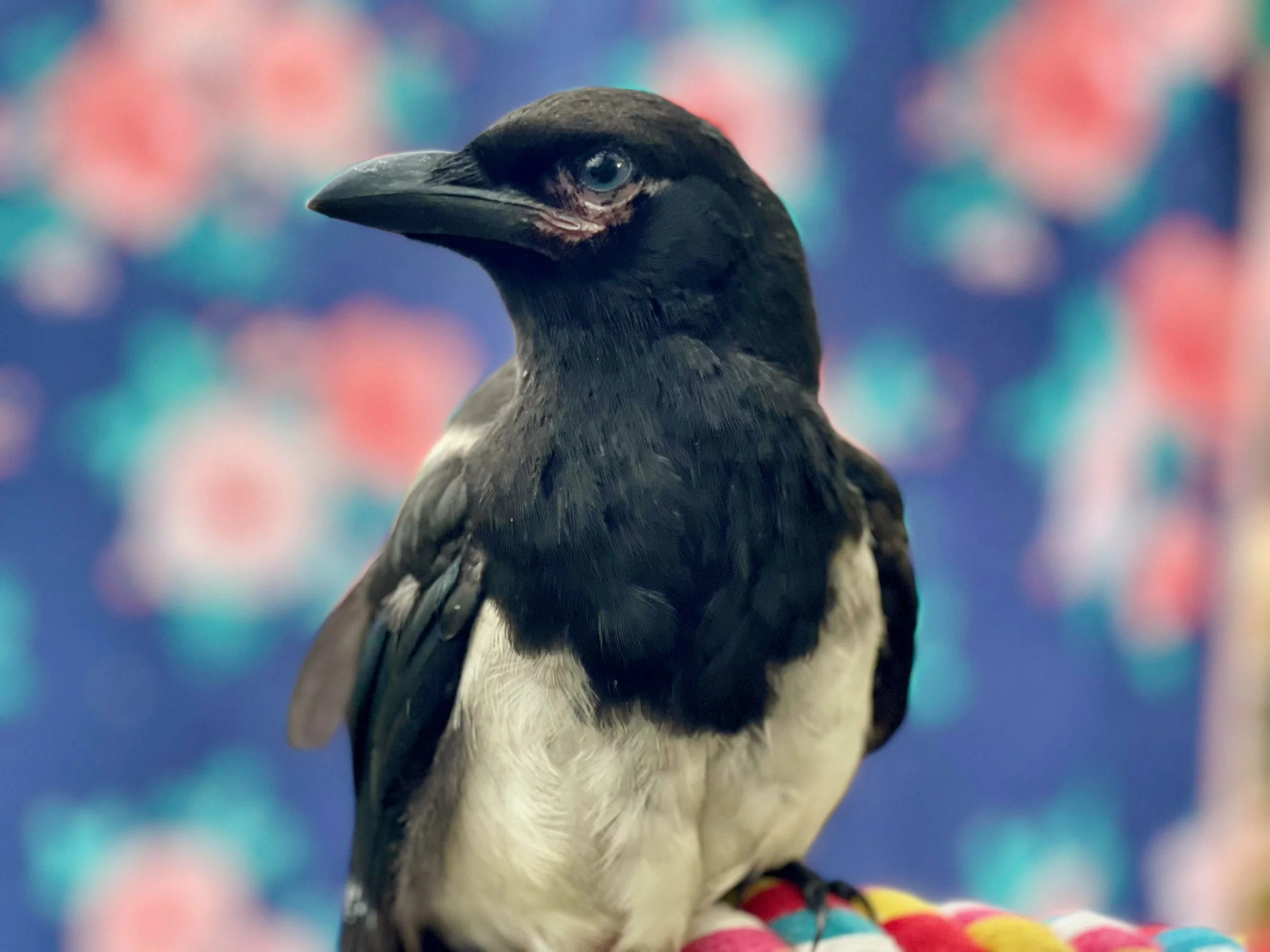
A young Ambassador Shavila shortly after he first arrived at Bird TLC. His behaviors, such as begging for food from people, demonstrated that he had imprinted on humans rather than on magpies.
Rehabilitators at BirdTLC therefore take care to prevent orphaned chicks in their care from imprinting on humans. They may even wear bird masks while feeding or handling chicks!
While imprinting is often a problem for rehabilitators, it can occasionally support bird conservation. In the early 2000s, scientists breeding endangered Siberian cranes at a nature reserve near Moscow encountered a problem. The birds needed to migrate from Russia to the Caspian Sea, but they had no parents to show them the way. Furthermore, the traditional route passed over conflict zones that might expose the birds to gunfire. To solve the dilemma, the chicks were allowed to imprint on a hang glider. When it came time to fly, the birds followed their mechanical “parent” on a 3,000 mile journey. A similar initiative called Operation Migration teaches captive-born whooping cranes to follow small aircraft south for the winter.
While these stories are uplifting, baby birds have the best chance of surviving in the wild if they imprint on an adult bird that can teach them the correct behaviors to survive. If you find an abandoned nest or chick, call BirdTLC immediately. If you find an abandoned nest or chick, call BirdTLC. Our trained rehabilitators will give orphaned Alaskan birds their best chance at a wild life, cherishing the imprint they leave on our hearts long after they’ve flown.