
Content provided by Bird TLC volunteer Lisa Pajot. Blog post written by Bird TLC staff.
Potter Marsh, 564 acres of freshwater marsh on the south end of Anchorage, is part of the 16-mile long Anchorage Coastal Wildlife Refuge. Bird enthusiasts, families, couples, and tourists stroll the 1/2 mile of elevated boardwalk, and wildlife photographers flock to the highway pullouts for photos of Tundra Swans, Arctic Terns, Bald Eagles, Red-necked Grebes, Greater Scaups, and more.
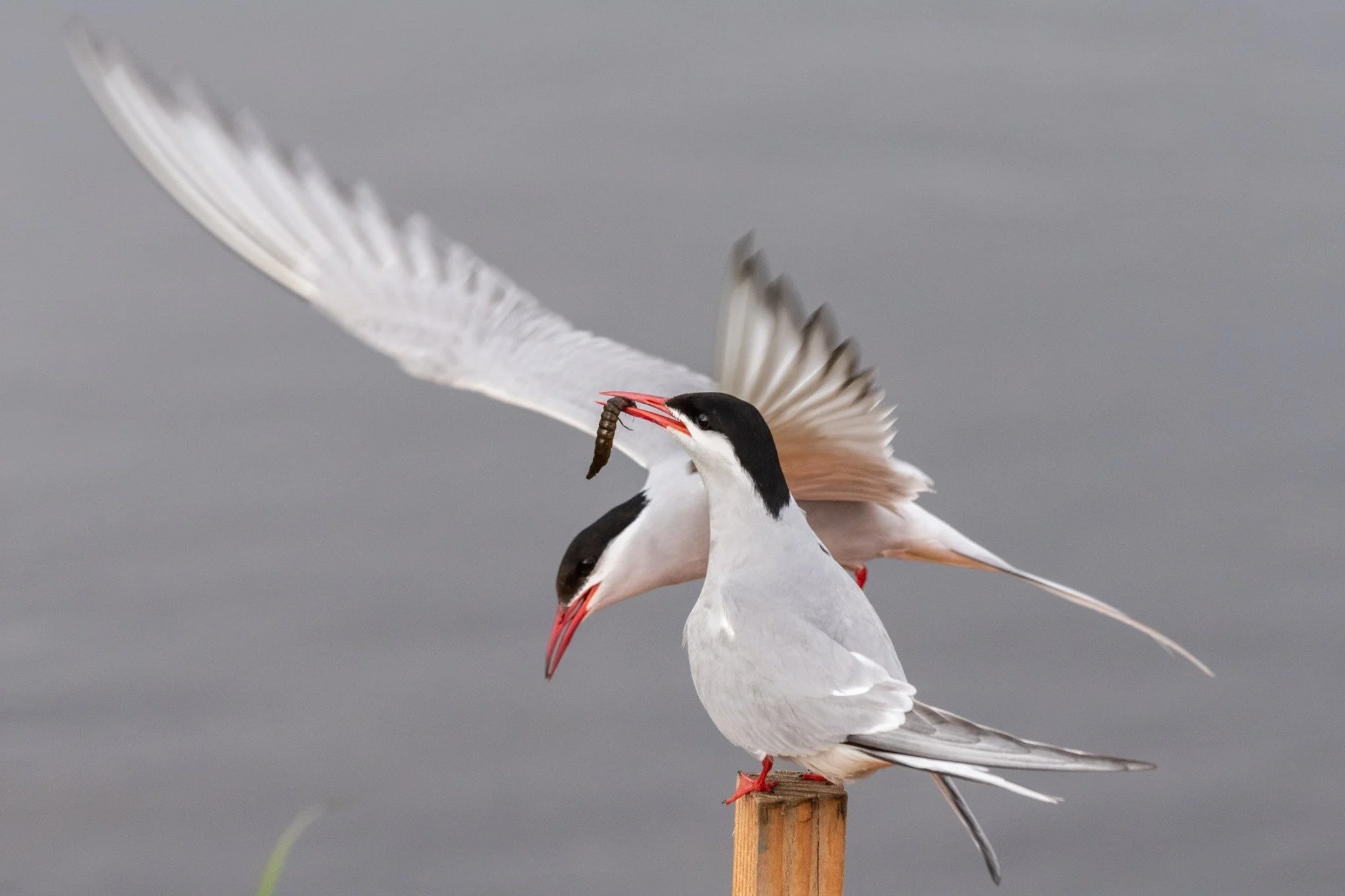
Arctic Terns at Potter Marsh
But popularity doesn’t always result in familiarity. Visitors are often not aware of the marsh’s fascinating history or how important its diverse habitats are to migratory birds.
What we know as Potter Marsh was originally a tidal estuary of traditional Dena’ina lands that was open to the tides of Turnagain Arm. The Dena’ina foraged for driftwood, food, and plants in the estuary.
How does a tidal estuary become a marsh? When a railroad is built.
With the construction of the Alaska Railroad in 1916-1917, water from the creeks flowing through the estuary was impounded, and fill from the southern end of the marsh was pulled, forming the deep ponds used by birds today.
While construction often decimates habitat, Potter Marsh is an exception. As the marsh filled, vegetation changed, and a dynamic ecosystem for birds was created with 160 species regularly migrating through and nesting in the marsh.
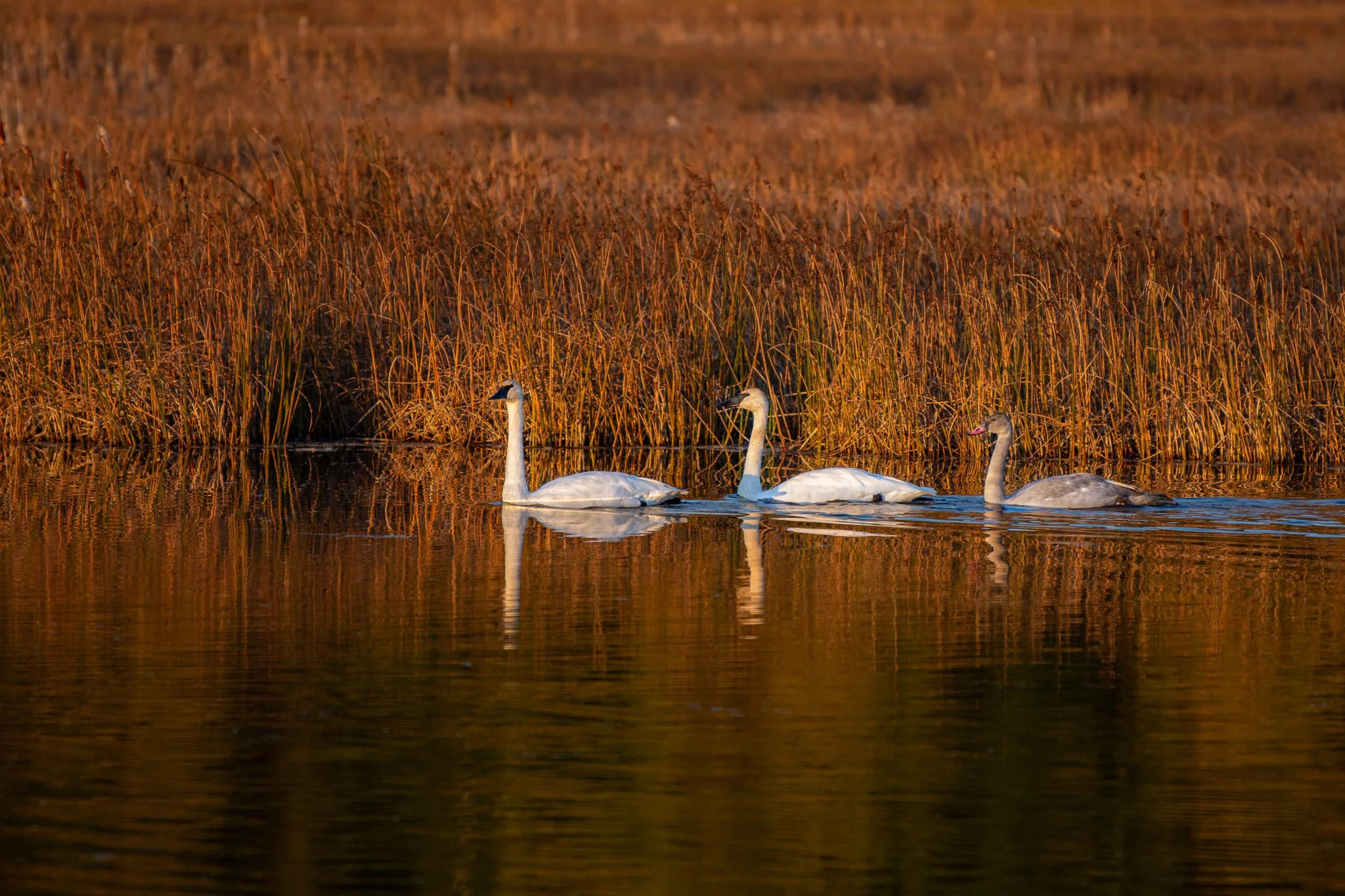
Trumpeter Swans and cygnet at Potter Marsh
In December 2024, a new chapter in the history of Potter Marsh began with the establishment of the 300-acre Potter Marsh Watershed Park. Great Land Trust, the nonprofit organization that raised $6 million for the park, notes that the Watershed Park, by protecting the waters that flow into Potter Marsh, will maintain the water quality in the marsh and protect over 800 acres of habitat for birds and other wildlife in both the park and the marsh.
Potter Marsh Watershed Park is managed by the Municipality of Anchorage Parks and Recreation Department. The department, with input from the community, has developed a master plan for the park.
The next time you visit Potter Marsh, look for the birds listed below, and look toward the Chugach Mountains to see the now-protected watershed that provides these birds with the habitat they need to survive.
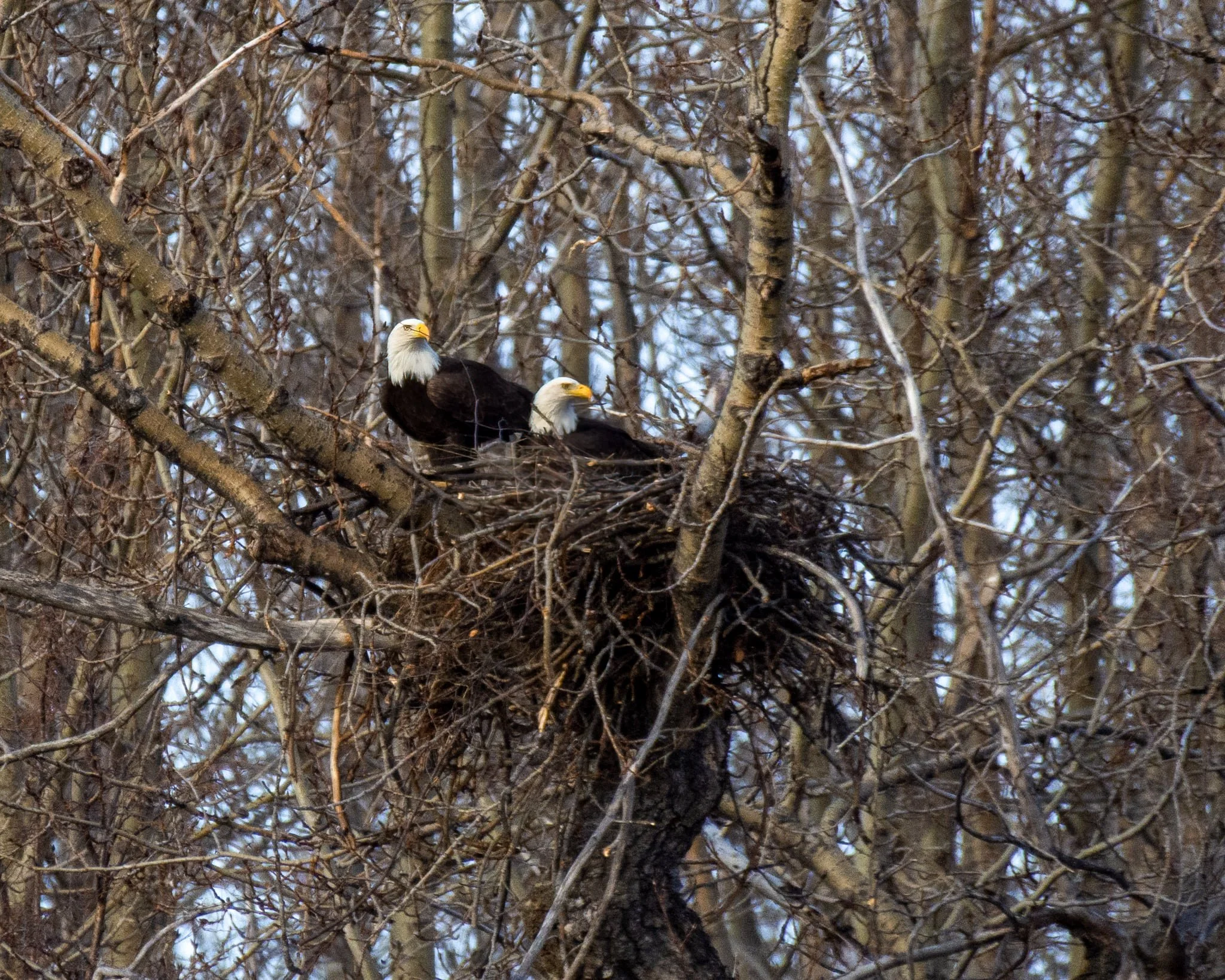
Bald Eagles nesting at Potter Marsh
Winter residents include:
Bald eagle
Great-horned Owl
Raven
Black-billed Magpie
Hairy Woodpecker
Downy Woodpecker
Black-capped Chickadee
Red-breasted Nuthatch
Spruce Grouse
Occasionally: Great-grey Owl, Sharp-shinned Hawk, Redpolls, and Pine Siskins
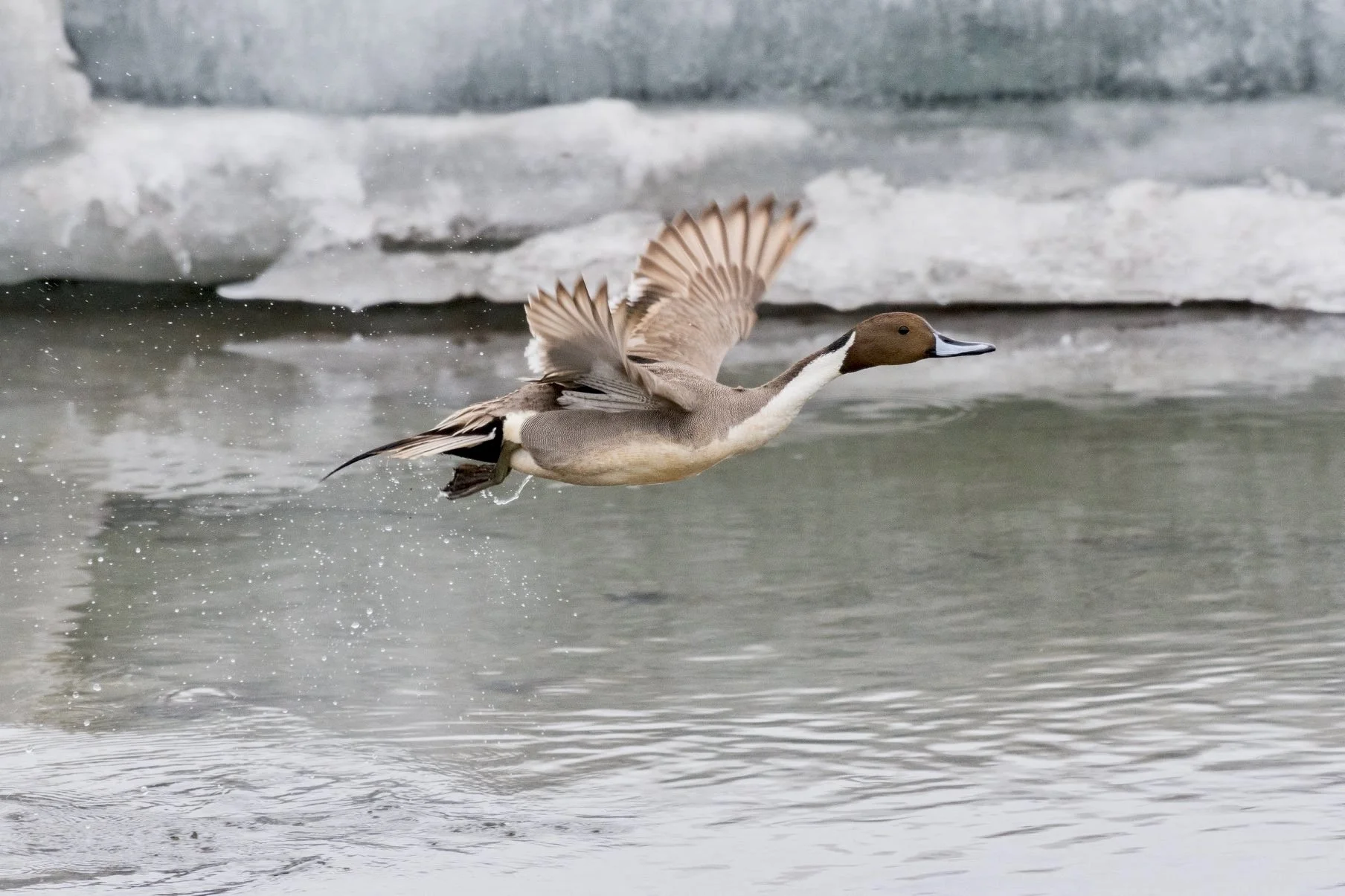
Northern Pintail at Potter Marsh
Summer nesting birds include:
Belted Kingfisher
Bald Eagle
Northern Harrier
Raven
Black-billed Magpie
Hairy Woodpecker
Downy Woodpecker
Black-capped Chickadee
Red-breasted Nuthatch
Tree Swallow
Violet-green Swallow
Bank Swallow
Lincoln’s Sparrow
Fox Sparrow
Orange-crowned Warbler
Alder Flycatcher
Ruby-crowned Kinglet
Yellow-rumped Warbler
Yellow Warbler
Savannah Sparrow
White-crowned Sparrow
Dark-eyed Junco
Lesser Yellowlegs
Red-necked Phalarope
Short-billed Dowitcher
Solitary Sandpiper
Semipalmated Plover
Least Sandpiper
Common Snipe
Sandhill Crane
Hudsonian Godwit
Green-wing Teal
American Widgeon
Northern Shoveler
Northern Pintail
Mallards
Glaucus-winged, Short-billed, and Bonaparte’s Gulls
Tundra Swans
Arctic Terns
Red-winged Blackbirds
Red-necked Grebes
Greater Scaup
Canada Geese
Great-horned Owls
Merlin
Hermit Thrush
Swainson’s Thrush
Black-poll Warbler
Occasionally: Red-tailed Hawk, Short-eared Owl, American Goshawk, Merlin